1 · Record
Our guided interview asks the questions families wish they'd asked: childhood, love, hard times, advice, the stories only they know. Answer on camera, by voice, or in writing — and add old letters, videos and photos.
Living legacies
VENER.AI builds a living portrait of the people you love — their voice, their stories, their humour, their way of seeing the world — so your family can still talk with them. Ask new questions. Hear old stories again. Introduce them to grandchildren they never met.
Consent-first · Encrypted at rest & in transit · Engineered to ISO 27001-aligned controls

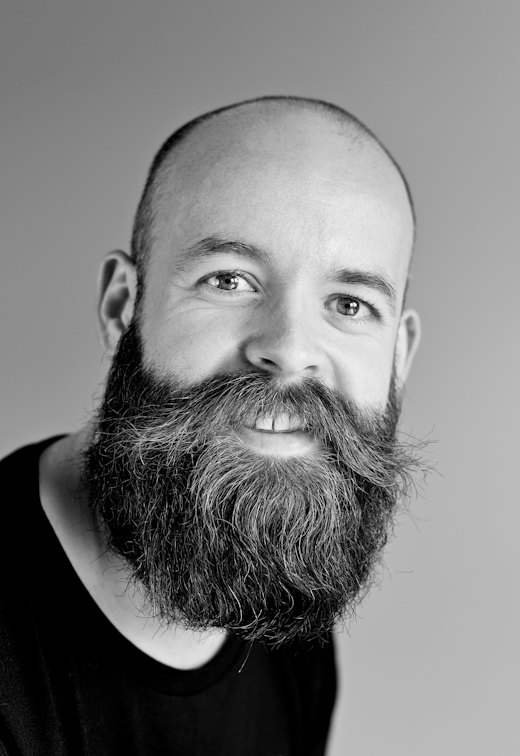
The centre portrait is real output from our pipeline — a fully synthetic person, our interview guide. Side portraits are illustrative stock imagery of models.
Our guided interview asks the questions families wish they'd asked: childhood, love, hard times, advice, the stories only they know. Answer on camera, by voice, or in writing — and add old letters, videos and photos.
VENER.AI listens to every recording and reads every letter, then weaves a faithful twin: the sound of their voice, the shape of their personality, and every memory — kept exactly as they told it.
Sit down and talk — on your phone, or send them to the living-room TV like a portrait walking between frames. Ask anything. They answer in their own voice, from their own life.
“I don't remember that, love — you'd have to ask your mother.”
A VENER.AI twin never invents a memory. What it doesn't know, it says so — the way they would have said it. And when you ask what they would have said, it estimates honestly from the values and stories they left behind, and tells you that's exactly what it's doing.
In a sitting, nobody faces a form. Our guide — a living portrait herself — asks one question at a time, out loud, and simply listens. Press one and hear her ask it.
Choose a question below.
Real output from our rendering pipeline, unedited. The guide is a fully synthetic person — no actor, no likeness borrowed. Every real twin is built only with the person’s recorded consent.
Not a synthetic narrator. The twin speaks with the voice captured from their own recordings — the pauses, the warmth, the laugh.
Every answer is grounded in what they actually said and wrote. Ask about the farmhouse, the war, the wedding — you'll get their telling of it.
Describe any situation — a job offer, a family decision, today's news — and the twin gives its best estimate of their view, reasoned from their recorded values, stories and ways of thinking. Always presented as an estimate grounded in what they left behind, never a claim to speak for them.
Start a conversation on your phone, tap once, and continue it on the TV — the whole family around one frame.
A twin is only ever built with the person's recorded consent, captured in their own words on camera. No consent, no twin. Ever.
Encrypted at rest in the EU, private to your account, and deletable in one action — recordings, memories, voice and all.
VENER.AI is a working platform — built end-to-end, running today, and being refined with our own family before anyone else's. Where it stands, honestly:
An iPhone app leads the interview like a gentle portrait sitting: each question is asked aloud, one at a time, and the app simply listens — hands-free, no buttons to manage — with encouragement along the way and a progress bar toward a twin that's ready to wake. In private family testing now.
The finished twin talks with you: answers grounded in their real memories, spoken in a voice cloned from their own recordings, with a gently moving portrait. Working end-to-end on our own infrastructure today.
Letters, photographs and old videos join the interview in one place, and every addition deepens the twin. Families add more whenever they're ready — at any pace, for years.
Founding-families launch: second half of 2026, onboarded personally from the priority-access list.
VENER.AI is built hands-on by its founder: the interview app, the twin-weaving pipeline, the voice and portrait engines, and the security architecture. One person, full accountability — the way we'd want it for our own family's memories. Say hello: sean@vener.ai.
VENER.AI is the trading name of VENERAI LTD, a company registered in the United Kingdom, operating under UK GDPR and EU GDPR with European data residency. The name comes from the Latin venerari — to honour with deep respect. That is the whole idea.
Honest engineering, stated plainly: consent is enforced by the platform, the twin never invents memories, every model we use is vetted for commercial licences, and our costs are covered by families — never by advertising or selling data. The details live in our privacy notice and terms.
We hold the most personal data there is — faces, voices, letters, memories. We treat that as a duty, not a feature.
It is a big step, and it isn't for everyone. We think of a twin the way you'd think of letters, home videos or a memoir — a way a person chooses to be remembered — made interactive. That's why consent is recorded in their own words, why the twin never pretends to be alive, and why your family controls it completely, including deleting it.
About an hour of guided interview makes a good twin; more makes a richer one. Old letters, voice messages and videos all help. The app guides you through it gently, question by question, at whatever pace suits.
Our consent-first design means the person themselves must record consent. For those already gone, we're studying a family-consented "memorial archive" mode with meaningfully reduced capabilities — register your interest and tell us about your situation; these conversations shape what we build.
No. Every reply is grounded in what the person actually recorded. If asked about something outside their memories, the twin says it doesn't remember — in their own manner. For new questions, it reasons from their documented values and says that's what it's doing.
Yes — that's one of the things families use it for most. Describe the situation and ask. The twin reasons from their recorded values, stories and views to give its best estimate of what they would have said, and presents it as exactly that: an estimate, grounded in what they actually left behind — never invented facts. The more of their thinking you record, the better these answers become.
Only the account that built it — and the people in the room, when you put it on the TV. Family sharing with per-person permissions is on our roadmap.
We onboard founding families from the priority-access list first, a handful at a time. Building and hosting a twin takes real computing power, so an invitation comes with a small cost contribution to cover those resources — it won't be free, and we'd rather be honest about that than surprise you. Full pricing will be a simple subscription per twin — never advertising, never data sales. That business model would be unthinkable here.
Join the queue for priority access to the founding-families launch. We onboard a handful of families at a time, personally. When your invitation comes, taking part involves a small contribution toward the computing resources your twin uses — but registering commits you to nothing. It reserves your place at the front, and you decide about a twin if and when you're ready.
We'll write to you personally when a place opens — and in the meantime, may we suggest the best first step: record something today, even on your phone. Ask them about their childhood home. You'll be glad you did.
No tracking here — no analytics, no advertising cookies; only what's strictly necessary to serve the page. Your details are encrypted the moment they arrive. Privacy notice